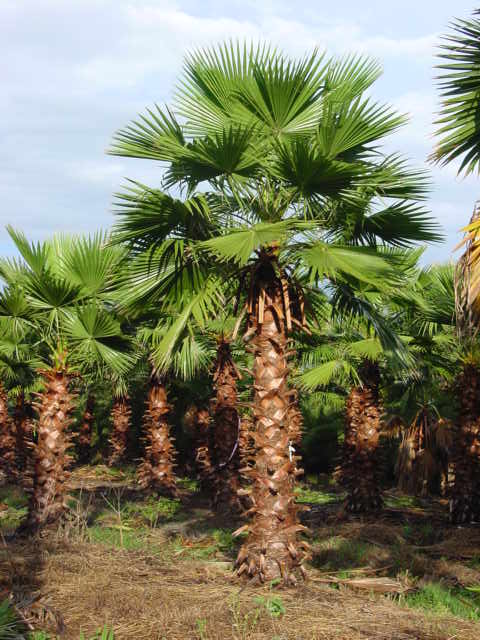
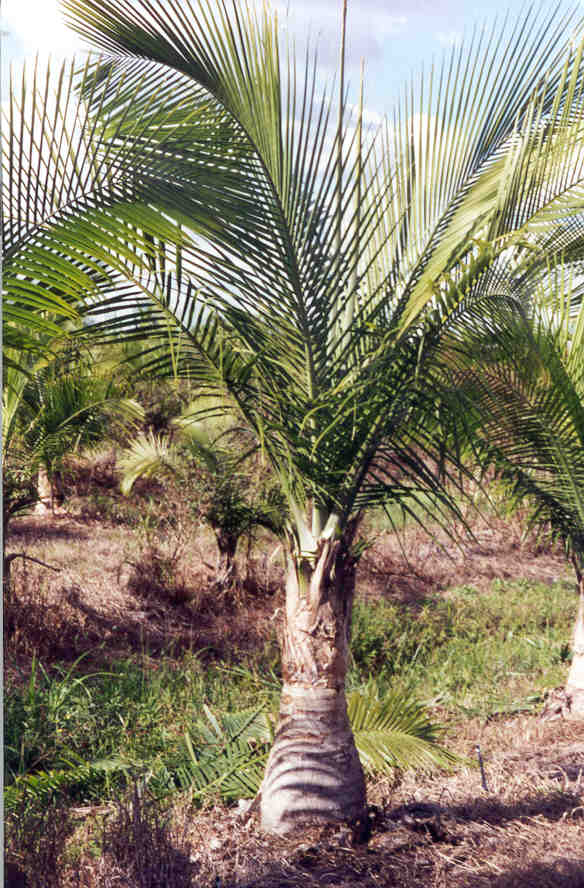
The pictures of Palms consist of photos of cold hardy Palm
Tree species. The pictures represent Palms which have been grown in borderline areas and are considered cold hardy Palm Trees. On this page is a listing for Palm pictures for several species. If you are looking for many pictures on a particular Palm Tree
species or type you can click on the pictures you want to see immediately below.
(Pictures 1-1)
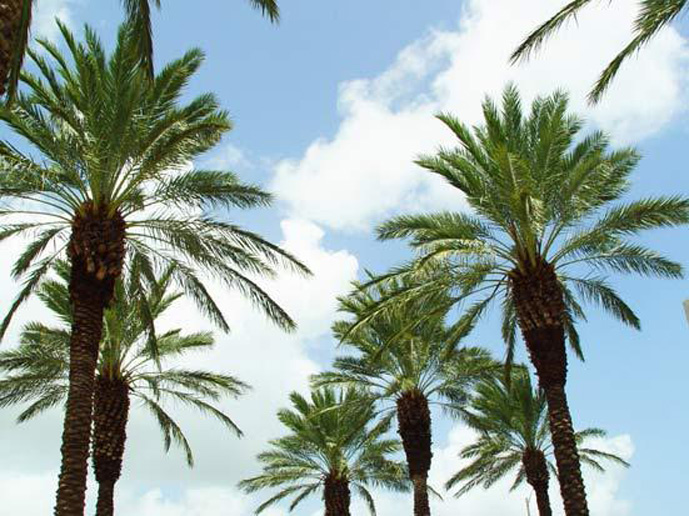
Date Palm Pictures
(Phoenix
dactylifera)
A rough textured slender trunk and feathery, widespreading canopy characterize the Date Palm Tree. The gray-green head of leaves is ascending in the center and downcurving towards the outside, giving a stiff formal appearance. Offshoots may appear at ground level or on the trunk.
|
 |
 |
|
(Pictures 1-2)
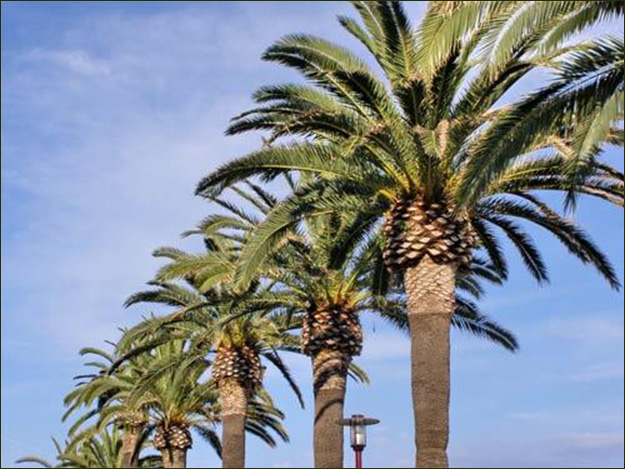
Canary Island Date Palm Pictures
(Phoenix canariensis)
This large, stately palm often reaches a size too
massive for most residential landscapes but,
fortunately, it is very slow-growing and will take a
considerable amount of time to reach its 50 to 60-foot-
height. Massive and imposing, the Canary Island Date Palm is the center of attention wherever it is planted.
|
 |
|
|
(Pictures 1-3)
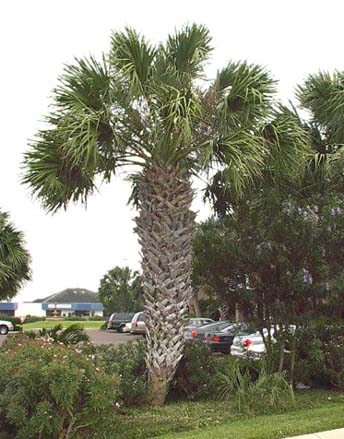
Texas Sabal Palm Pictures
(Sabal texana, mexicana)
A very robust, stately and hardy palm, the Texas Sabal Palm is beginning to receive greater attention from growers and palm enthusiasts. One of only two palms native to Texas. *The Palm to the right is a Sabal palmetto, a close cousin to Sabal texana.
|
 |
|
(Pictures 1-4)
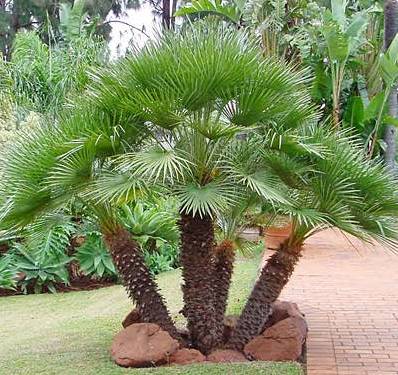
Mediterranean (European) Fan Palm Pictures
(Chamaerops humilis)
This slow grower is one of the most cold-hardy of all palms. The distinctive fan-shaped fronds are composed of stiff, blue-green to gray-green leaflets. These eventually form a compact head at the end of each curved stem. The suckering habit eventually results in pleasing stem groupings and much landscape interest. This small palm tree makes a striking accent plant against architectural features. It is one of the best species for containers as well as for massing at the base of taller growing palms.
|
 |
|
|
(Pictures 1-5)
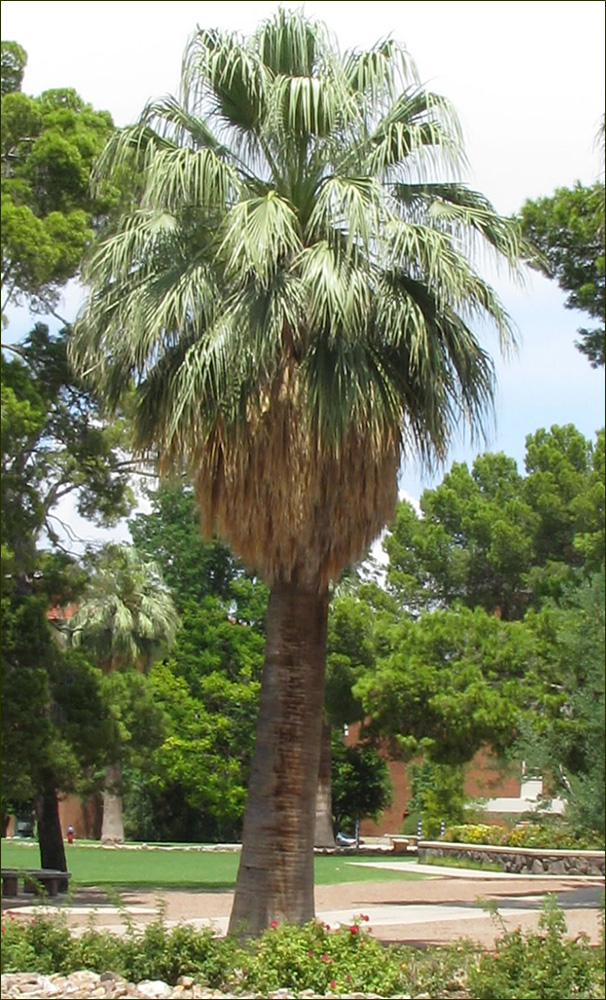
California Fan Palm Pictures
(Washingtonia filifera)
A powerful, stately palm whose heavy trunk supports a crown of large, fan-shaped leaves. Foliage stands erect and spreading on spiny petioles when young. With maturity, leaves droop to the smooth trunk forming a handsome thatch. A powerful, stately palm whose heavy trunk supports a crown of large, fan-shaped leaves. Foliage stands erect and spreading on spiny petioles when young. With maturity, leaves droop to the smooth trunk forming a handsome thatch.
|
 |
|
(Pictures 1-6)
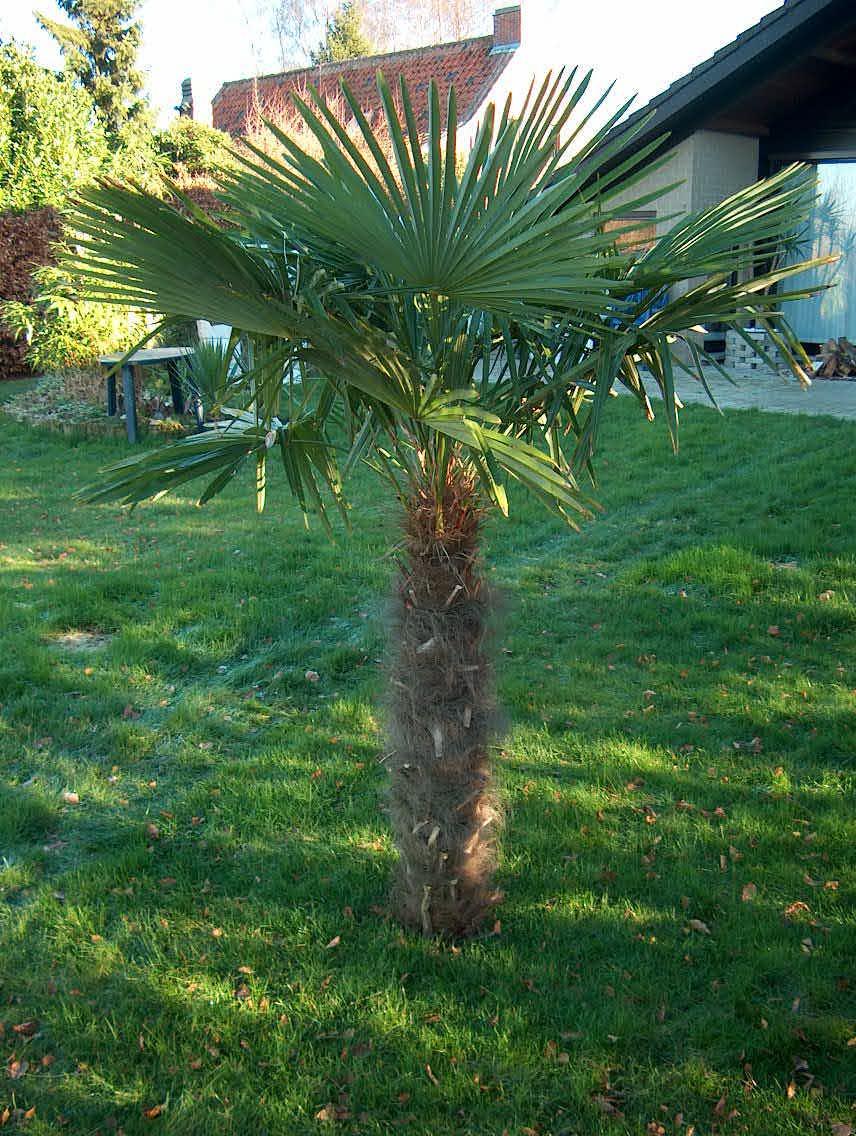
Windmill Palm Tree Pictures
(Trachycarpus fortunei)
The Windmill Palm tree has been extensively planted and grown during the last five years in most Northern States and in Canada in defiance to the USDA Plant Hardiness Zones. www.ScanPalm.no reports based on years of research - "Older and more established individuals of Trachycarpus fortunei can manage temperatures down to -13°C, but then with some damage on the leafs. If the temperature goes down to -17°C (0 degrees to Americans), the leafs will suffer badly. But the situation's final outcome depends on numerous factors like the length of the cold period, humidity, and wind."
|
 |
|
(Pictures 1-7)
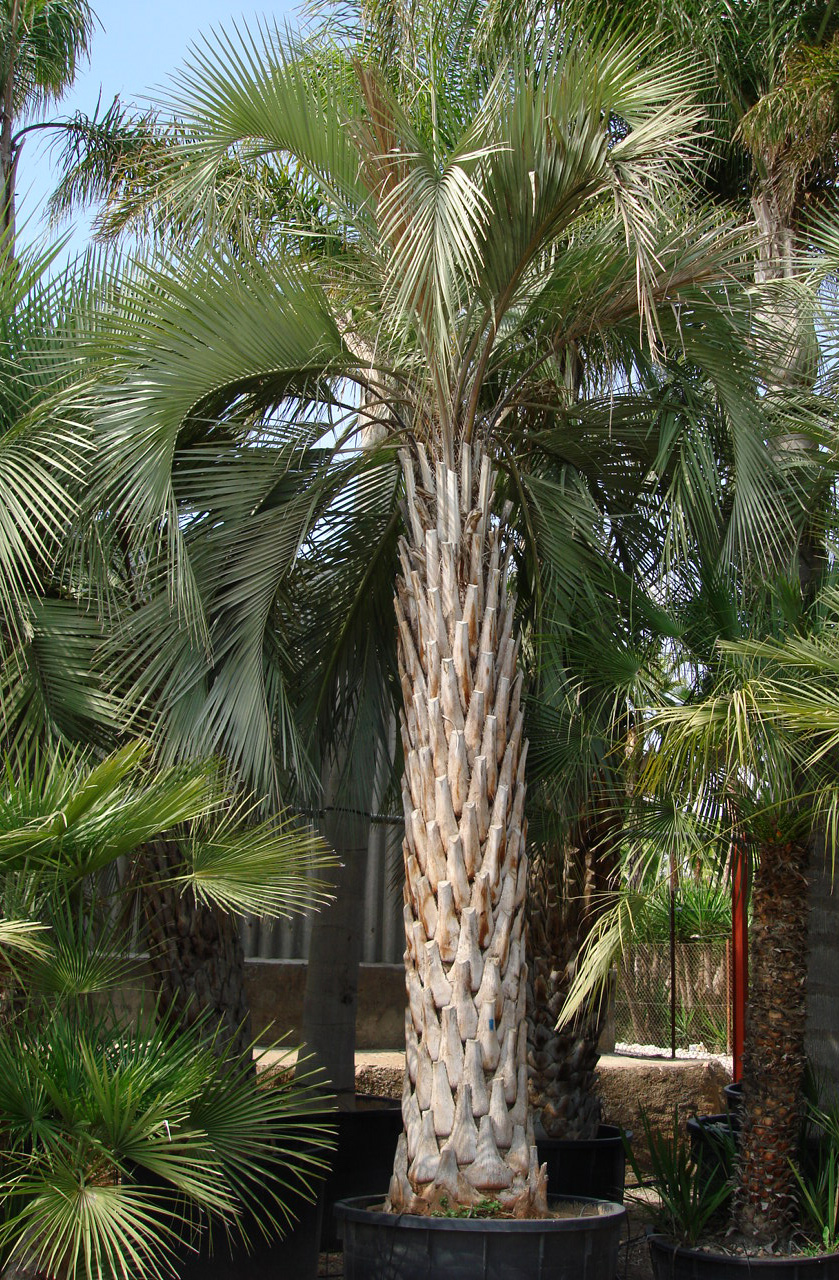
Pindo Palm Tree Pictures
(Butia capitata)
A crown of gray-green fronds strongly recurved, create a graceful cascading effect for this feather palm. The stocky trunk becomes patterned with the stubs of old leaf bases. Females bear large clusters of edible fruits with a pineapple-like flavor. The Pindo Palm is excellent as a low, bushy specimen for containers, tubs or gardens. It is attractive when interplanted among tall, slender palms.
|
 |
|
(Pictures 1-8)
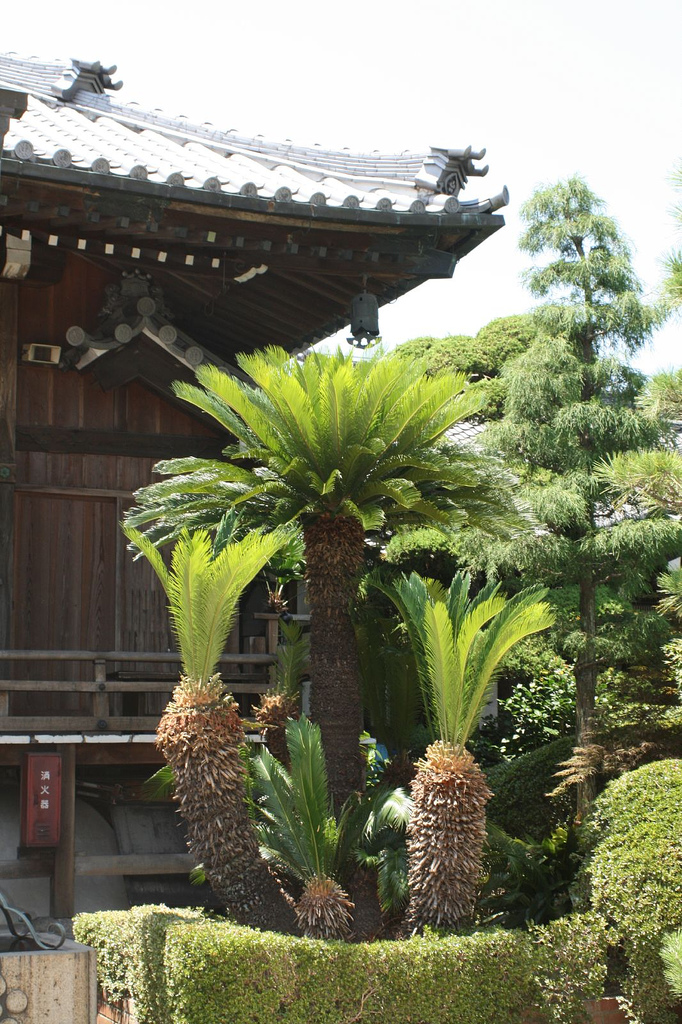
Sago Palm Pictures
(Cycas revoluta)
The Sago Palm is a compact plant and not a true palm, but a cycad. The shiny, dark-green foliage consists of numerous feathery leaves arranged in a flat spiral at the top of the heavy black trunk. The plant is slow-growing, producing new leaves only once a year. The Sago Palm makes an excellent tub or planter subject. It is effective when combined with other tropical and subtropical plants. Small Sago Palms are sometimes used under tall trees in place of ferns.
|
 |
|
(Pictures 1-9)
Mexican
Fan Palm Pictures
(Washingtonia robusta)
The Mexican Fan Palm is a tall, graceful fast-growing palm. Bright green, fan-shaped leaves form a luxuriant but more compact head than California Fan Palm. The trunk flares at the base but tapers into a slender column above. The dry leaf thatch is not so uniform or attractive as that of the California Fan Palm. It may be removed or allowed to hang naturally, and oftenbreaks loose. This species hybridizes easily with W. filifera, so that a large variation in appearance is possible.
|
 |
|
(Pictures 1-10)
Queen
Palm Pictures
(Syagrus romanzoffiana)
The Queen Palm Tree really does strike a regal pose in the landscape. Growing to maximum height of about 50 feet, this palm has a smooth straight grey trunk ringed with evenly spaced leaf scars and topped with a large canopy of feathery plumes. These lacy fronds are a dark glossy green and have double rows of leaflets. These droop to the ground like double rows of fringe to cast shady patterns on the lawn. Informal groupings of three or more queen Palms provides soft filtered sunlight perfect for shade gardens.
|
 |
|
Palm Tree Pictures

|